



- TOP
- Sustainability
- Positively Impacting Climate Change
Initiatives at Logistics Centers
SUSTAINABILITY MENU
Initiatives at Logistics Centers
In logistics operations, Mizkan contributes to reducing environmental impact through joint delivery and modal shift initiatives.
To reduce CO₂ emissions, the Company continues to promote a range of measures aimed at achieving more efficient transportation and delivery.
Joint Delivery
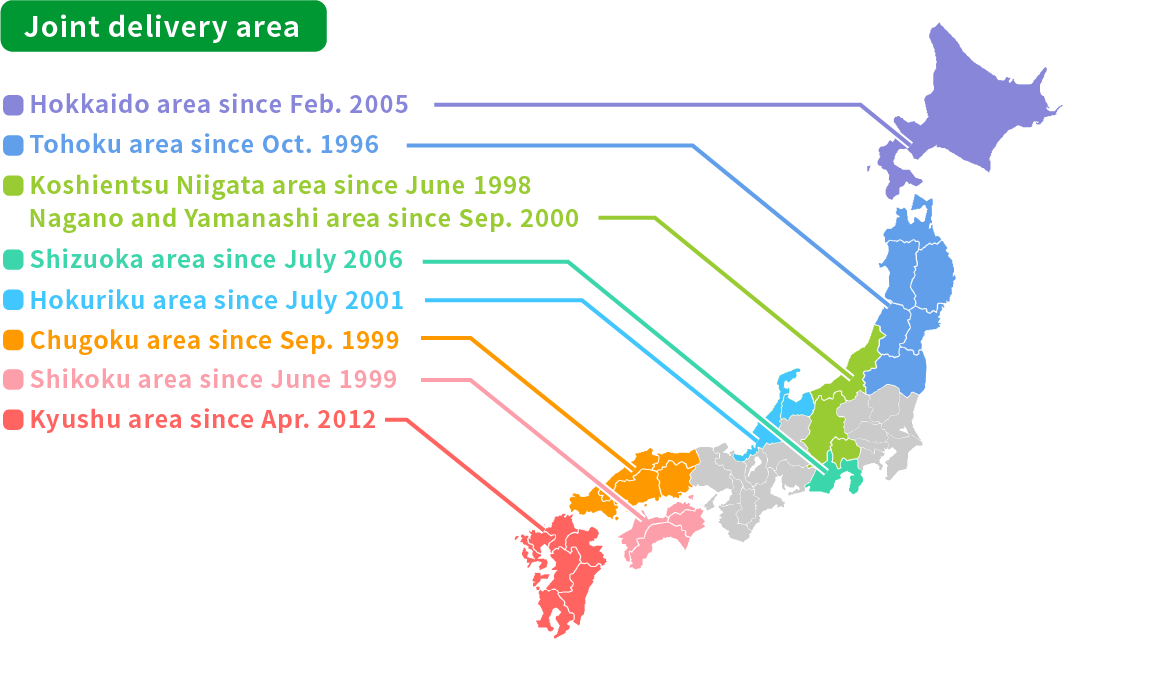
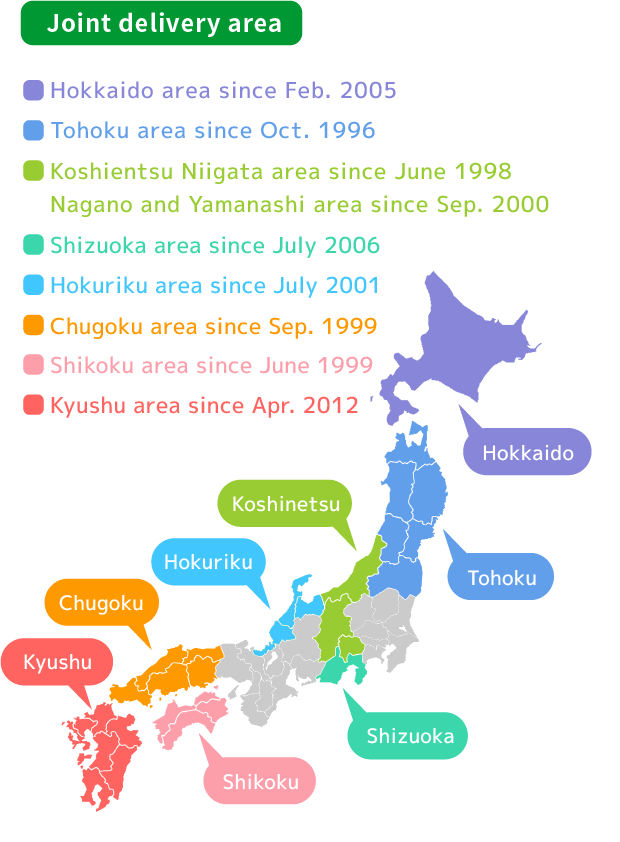
Mizkan has implemented joint delivery with partner companies since 1996. Under this approach, products from partner companies are loaded onto the same vehicles and delivered efficiently to each company’s customers. Compared with individual deliveries by each company, joint delivery reduces the number of vehicles in operation and enables the use of larger vehicles, contributing to lower CO₂ emissions, reduced traffic congestion, and noise mitigation. Joint delivery with partner companies has now expanded to cover approximately 75% of Japan’s land area.
Modal Shift
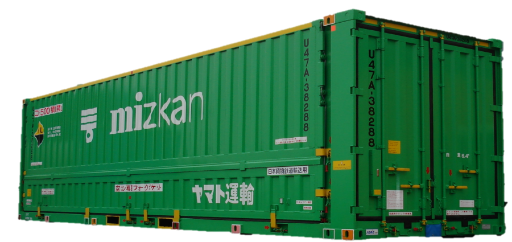
Modal shift refers to the transition from truck transportation to rail or maritime transport, which allows for large-volume shipments with lower CO₂ emissions. In 2023, Mizkan’s modal shift rate* reached 54.7%. Going forward, the Company will continue to promote measures for efficient transportation and delivery to further reduce CO₂ emissions and achieve ongoing improvements.
* The modal shift rate represents the proportion of freight tonnage transported by rail or maritime transport out of the total freight tonnage transported over distances of 500 km or more.